Strip Mosaic Overview
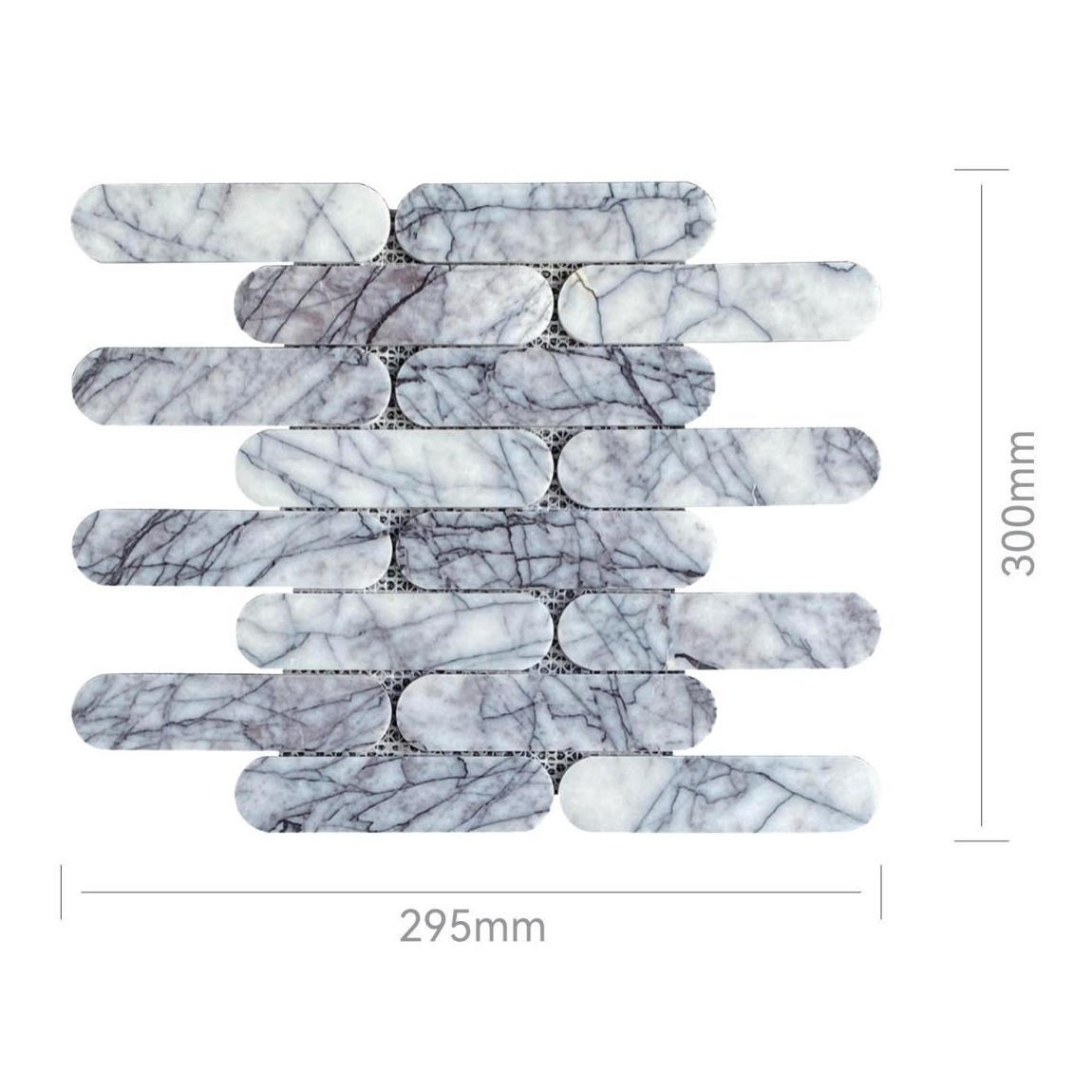
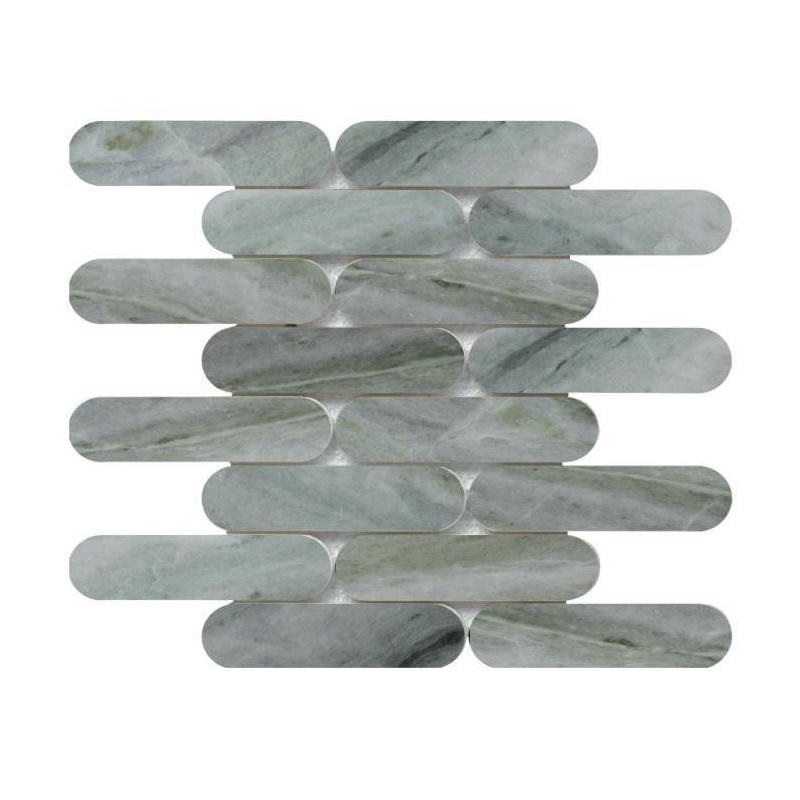
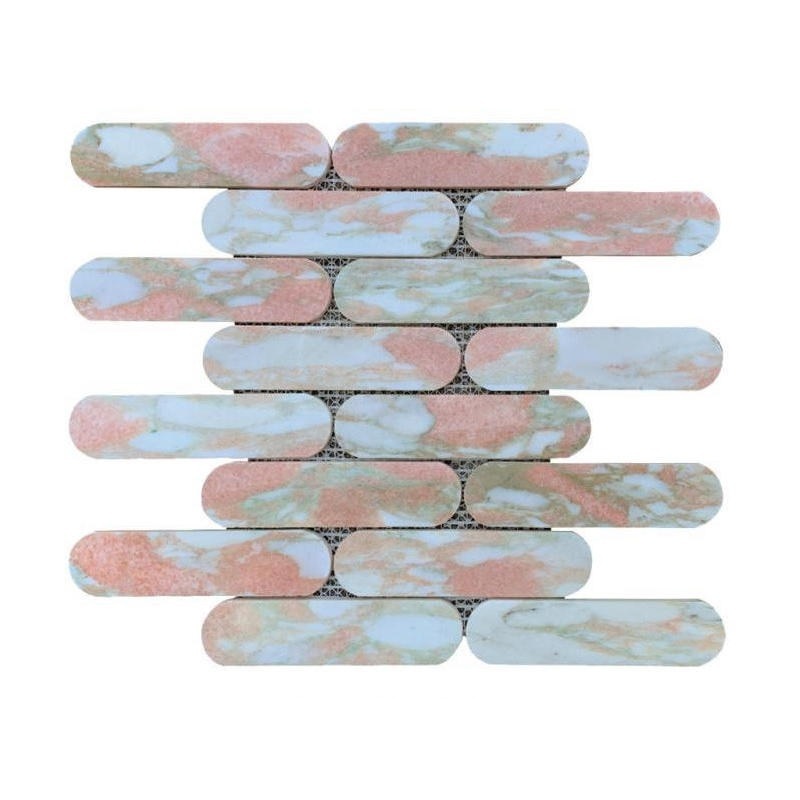
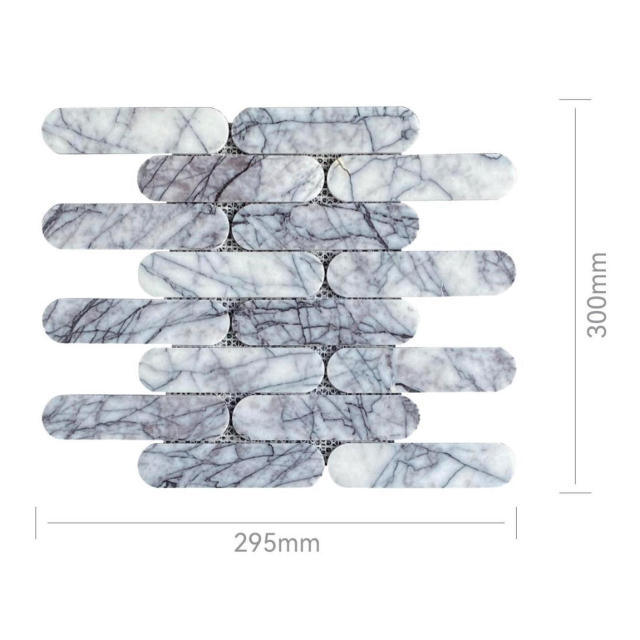
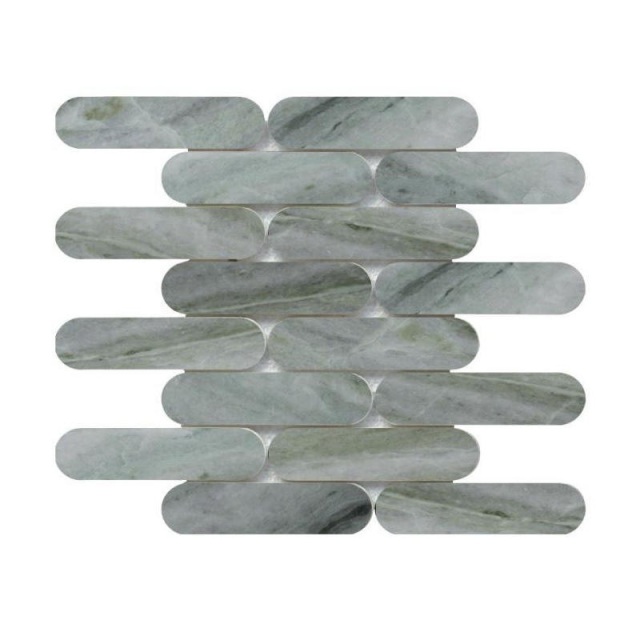
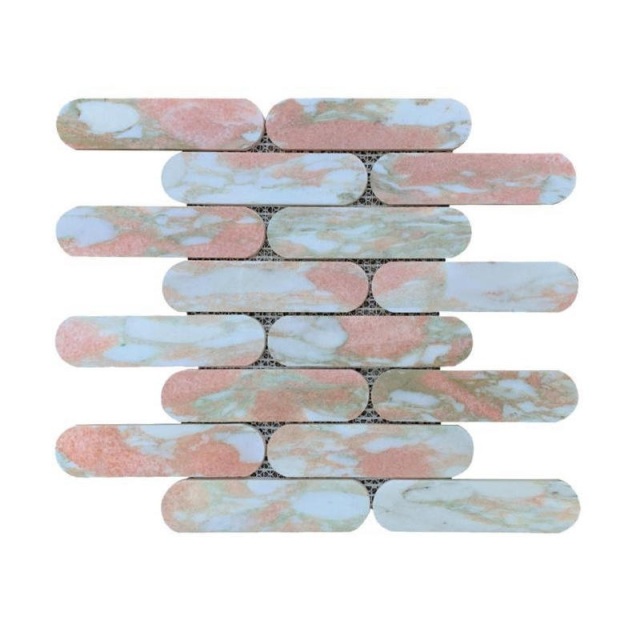
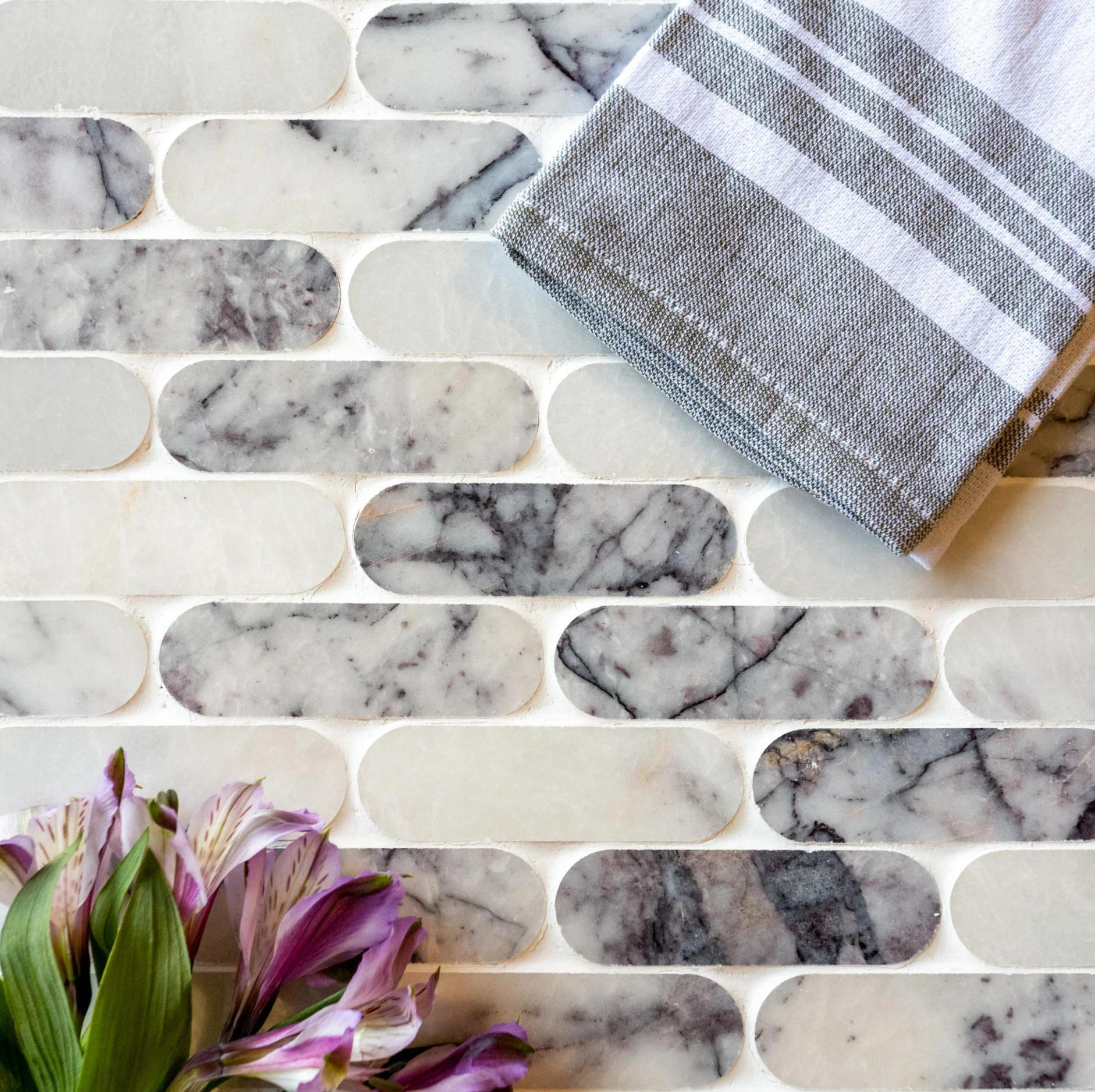
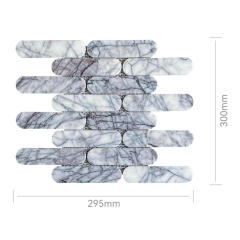
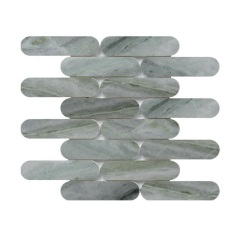
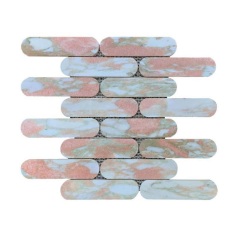
A strip mosaic is built differently from a square one. The pieces here are rounded oblong strips of natural marble, cut to a consistent width, polished, and set in a staggered offset on a mesh-backed sheet. Run across a wall, the strips read as a continuous band of stone rather than a grid of tiles, and the offset stops the eye at every course change. The strip mixed color marble mosaic tile is a mixed sheet rather than a single-colour one. Within each module the strips move between cool grey-white marble with darker veining and warmer pale tones, so the finished field has depth: from across a room it reads as one soft colour, and up close the individual strips separate. Because the strips are cut from block, the veining follows the length of each piece, which is what gives the wall its direction. Each sheet is mesh-mounted, so the strips arrive already spaced and aligned. The setter works sheet by sheet, the joints stay even, and the mesh can be cut with a knife to turn a corner or clear a socket. On a tall elevation the same module repeats, so a chimney breast, a lobby wall or a bar front can be covered without the pattern drifting out of step. Most of our buyers use it indoors on walls: living room feature walls, hotel corridors and lobbies, restaurant and bar fronts, vanity walls, reception and commercial backdrops. It is a wall material — we do not recommend it for floors or external façades. Showrooms, distributors, designers and fit-out contractors come to it for different reasons: a decorative range, a specific look, or a priced wall package.
Strip Layout & Colour Mix
- Half-step stagger. Each course steps against the one below so vertical joints never line up. A stacked layout looks architectural and hard; a stagger looks laid by hand, softens the joints and absorbs the small dimensional differences natural stone always has.
- Direction is a design decision, not a factory one. A linear strip stone mosaic for living room feature wall elevations is usually run horizontally, because long horizontal lines stretch a wall and make a narrow room feel wider; turned 90 degrees, the same sheet pulls the eye upward and gives a low ceiling more height.
- One direction per elevation. Changing direction halfway up a wall breaks the field and rarely reads as intentional, even when it is.
- The mixed palette works because the tones sit close together. Cool grey-white grounds with darker veining are laid beside warmer pale strips, and the proportion of each shifts from sheet to sheet — a perfectly even mix looks printed, not quarried.
- Expect movement between sheets. Lay several out dry on the floor before fixing and shuffle them until the field reads evenly; pull the whole elevation from one production run so the mix stays coherent.
- The polished face changes with the light. Opposite a window the marble strip mosaic picks up a soft sheen and the veining becomes more visible in the evening; in a dim corridor it reads almost matt. Check it beside a glossy floor or a honed worktop before you commit.
- Edges and corners. Trim the mesh and cut individual strips to finish against an internal corner; on an external corner, mitre the strips or close the edge with a stone return rather than leaving mesh exposed.
Strip Cutting & Mesh Mounting
- Selection and sorting. Incoming block is inspected and sorted by tone before anything is cut, so the mix inside a sheet is planned rather than random. As a stone mosaic tile factory we buy block directly and cut it in our own workshop, which is what makes this sorting step possible.
- Strip cutting. Sorted block goes to the saw and is sliced into strips of consistent width, then calibrated so every face sits level with its neighbours once mounted.
- Grinding and polishing. Faces are ground and polished on the line — the step that produces the sheen and the depth in the veining.
- Mesh mounting. Strips are laid face down in the stagger pattern and bonded to the mesh backing; the sheet is then trimmed square so the modules butt together cleanly on site — a linear strip stone mosaic for living room feature wall is only as good as the sheet-to-sheet alignment behind it.
- Quality check. Each sheet is checked for alignment, chipped edges and tone balance across the module, plus anything that would show once the wall is lit. Rejects come out here, not on site.
- Packing. Sheets are stacked with protection between layers, carton-packed and palletised, so the faces arrive as they left the workshop.
Marble Performance & Care
- Water absorption. It tells you how much a marble wall will take on in a splash zone and how hard a sealer has to work. Ask for the measured figure and the method used to obtain it — an unqualified "low absorption" line is not the same thing.
- Mohs hardness. Marble sits below porcelain and engineered quartz on the scale, which is why grit and scouring powder leave visible damage. Request the measured value rather than a general statement about durability.
- Flexural and compressive strength. These are the numbers a fixer cares about: how the sheet tolerates handling, and how flat and sound the substrate must be before it goes up. Both are reported together with the test method.
- Getting the figures. All three are batch-specific, so ask your sales contact for the current report for the colour and production run you are quoting before you sign off a wet area or a large elevation.
- Adhesive and substrate. Fix with a thin-bed adhesive suitable for marble on a flat, dry, sound substrate, and follow the adhesive maker's open-time and coverage guidance rather than the habit of the last job.
- Grout. Work in small areas and sponge off before the grout sets; a fine joint keeps the stagger reading as a line rather than a grid.
- Sealing. On vanity and splash walls an impregnating sealer slows staining and buys time to wipe up. Reseal according to the sealer used and the traffic the wall sees.
- Cleaning. pH-neutral stone cleaner, a damp cloth, nothing abrasive. Acidic descalers, bleach and scouring powder are the usual reason a marble wall goes flat.
- Before fixing. Keep sheets flat and dry, out of direct sun, and open only the cartons you need that day.
Interior Wall Applications
A feature wall is the obvious place to start, and the strip format suits several kinds of interior. For a linear strip stone mosaic for living room feature wall use, a single full-height elevation or a chimney breast is enough: it carries the wall on its own, which is why most rooms only need one. More than that and the room starts to feel like a showroom.
Hotel lobbies and corridors use the module repeat across long runs, where the mixed tone hides scuffs better than a flat polished panel and the sheen keeps a dim corridor from looking dead. Bar and restaurant fronts use it under a serving ledge or behind the counter, where a polished marble face wipes down between services without losing its finish.
Bathrooms use the strip mixed color marble mosaic tile above a vanity or along a splash wall — the material gives a small room weight, and a sealed surface copes with everyday splashes. Reception desks, commercial backdrops and display niches use it where a branded wall has to photograph without glare blowing out the shot.
In every case it replaces something flatter: painted plaster, a single-colour tile, or wallpaper that marks the first time somebody leans on it. What the wall gains is surface rather than colour.
Specifications
| Attribute | Detail |
| Product reference | No. MM795 |
| Material | Natural marble |
| Tile form | Rounded oblong strips, staggered offset layout |
| Mounting | Mesh-backed sheet |
| Surface | Polished |
| Colour | Mixed marble tones within each sheet |
| Sheet size | Confirmed against your drawing before the order is priced |
| Thickness | Confirmed against your drawing before the order is priced |
| Coverage per carton | Confirmed with your quotation |
| Recommended use | Interior wall cladding, feature walls, backsplashes, vanity walls |
| Production | Strips cut, polished and mesh-mounted at our own works |
| Packing | Sheets carton-packed and palletised for export |
| Customisation | Private label, own colour mix and packaging on request |
Advantages & Custom Service
- Factory-level pricing.
- Production depth. Four automatic quartz slab production lines and modern machinery run alongside the mosaic work, so standard runs and custom runs both have capacity behind them.
- In-house research and development. A professional R&D department develops new stone designs and reviews bespoke requests before they reach the workshop.
- Experienced hands. Cutters and mounters who have worked the stone for years, backed by a management team that plans production around confirmed orders.
- Dedicated quality control. A QC team inspects at sorting, cutting, polishing, mounting and packing — at each stage, not only at the end.
- OEM service is available: your brand on the carton and label, your specification on the sheet.
- Custom modules. If a project calls for more than the standard sheet — a different strip width, a larger panel proportion, a particular tone balance — send the drawing and we will confirm what the workshop can hold.
- Buyer feedback. Importers in the United States, wholesalers in Europe and builders in Australia all buy across this range; what comes back is consistent quality and a finish that holds its appearance in the market they sell into.
Ordering & Delivery
| Term | Detail |
| Lead time | 15–25 days after deposit |
| Sheet size and thickness | Confirmed against your drawing before production |
| Order quantity | Confirmed per design with your sales contact |
| Packing | Sheets carton-packed, palletised for export |
| Samples | Ask your sales contact about sample availability and current terms |
| OEM and private label | Available; artwork and carton labelling confirmed on the order |
| Payment terms | Confirmed in writing before production starts |
| Shipping | Booked with your forwarder or ours; loading confirmed at booking |
Scale & Supply Capability
Bestone has been in the stone trade since 2007 and selling through our website to overseas buyers since 2012. Production is in-house, so standard runs and custom or private-label orders are handled by one team rather than passed between suppliers. We serve distributors, fabricators, contractors and designers across North America, Europe, the Middle East, Southeast Asia and Australia, and we confirm each order in writing before production starts. Send our sales team your quantities, destination and target specification, and we will tell you exactly what we can commit to.
FAQ
Is the strip mixed color marble mosaic tile natural marble or engineered stone?
Natural marble. The strips are cut from block, polished and bonded to mesh, with no resin-and-quartz body behind them. If you need an engineered surface for a countertop or vanity top, that sits in a different part of our range.
Can the strips run vertically instead of horizontally?
Yes. Direction is decided on site, not at the factory, and the sheets can be laid either way — turning them 90 degrees is a legitimate choice when you want a low ceiling to feel taller. Whatever you choose, keep one direction across the whole elevation.
How much will the tone vary from sheet to sheet?
Each sheet is mixed from sorted marble, so the balance of light and dark strips moves a little between modules. Dry-lay several sheets on the floor before fixing and shuffle them until the field reads evenly, and pull the full elevation from one production run so the mix stays consistent.
Can it be used on a bathroom wall or inside a shower?
On vanity walls and splash zones, yes — seal the marble and wipe splashes promptly. Inside a shower enclosure, check the detail with us before you specify it, and we do not recommend the sheet for shower floors.
How do I cut the sheets around sockets and corners?
Score and cut the mesh from the back with a utility knife, then trim individual strips with a wet saw or a grinder fitted with a stone blade. Cut slightly inside the line and finish with a diamond pad so the edge does not show. As a stone mosaic tile factory we can talk your fitter through the sequence if you send a photo of the detail.