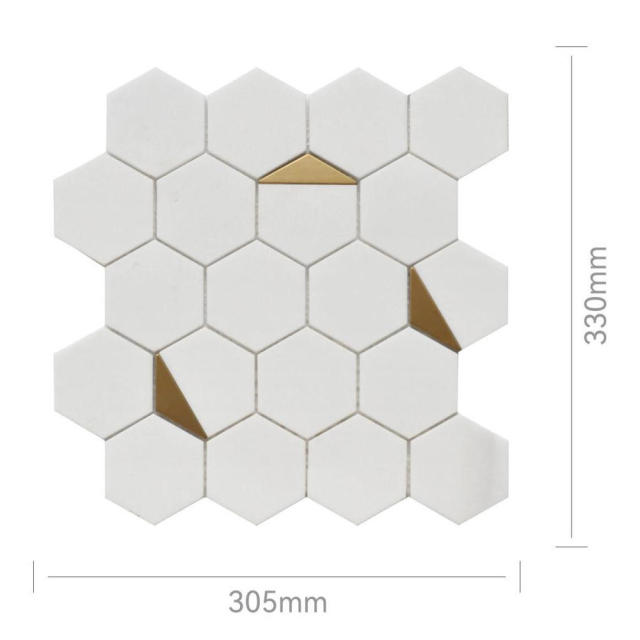
Some walls want a plain surface; some want a surface with a drawing on it. This white marble stone mosaic belongs to the second kind — Thassos white marble cut into triangles and set with slim gold brass inlay, so the wall carries a pattern without becoming busy.

Each sheet arrives mesh-mounted, which means a fitter sets a whole panel at a time instead of picking individual pieces into place. The face is polished, and that is what gives the white its depth: light moves across it rather than sitting flat on it.

We build these sheets for interior walls: as a geometric white marble tile for shower wall decoration, on bathroom feature walls, on vanity splashbacks and across the wall areas of hotel guest bathrooms. They replace plain white ceramic tile or a painted wall, at a fraction of the handling and fabrication cost of a book-matched marble slab, because nobody has to lift or cut a heavy panel on site.

Day to day the wall is easy to live with. The joints are narrow compared with a small square tile, so there is less grout to scrub, and the polished face wipes clean with a soft cloth.
Most buyers of this sheet are not choosing one piece for a spare bathroom. They are distributors stocking a pallet, fabricators who want a sheet that can be cut around a shower valve without the pattern falling apart, contractors fitting out twenty identical bathrooms, and designers who need a pattern to hold its line across a three-metre wall. The specification below is written for that kind of order.


The design is geometric, but it is not loud. White marble triangles sit face up in a repeating layout, separated by thin lines of gold brass that follow the shapes around them. From a metre away it reads as a soft white wall with a warm metallic thread running through it; from close up, the joints, the marble grain and the brass edges separate into three distinct textures.


The brass changes the way the white reads. On this white marble stone mosaic the gold inlay warms a cold white and ties the wall to brass tapware, mirror frames and light fittings; under a single mirror light, the metal lines catch the light and keep the surface from going flat. If you would rather keep it quiet, set the sheets with white grout so the joints disappear and only the brass shows.

Direction matters. The pattern is laid on the mesh so consecutive sheets continue it, which is why we ask fitters to dry-lay a run before mixing adhesive — check that the brass lines flow across the joints before committing, especially where a sheet turns an inside corner into a shower niche.
The finished surface is polished marble with a metal inlay, so treat it as a stone wall: pH-neutral cleaners, a soft cloth, and no abrasive pad across the brass. This is a finish people stand close to every day, and the details above are what make that close look hold up.


Specifiers need numbers, and stone data belongs to the batch rather than to a photograph. When a submittal needs figures for this sheet, ask your sales contact for the current test report covering the marble in your order, and read it for the method as well as the result.

The four values a wet-area specification usually asks for are water absorption, Mohs hardness, flexural strength and compressive strength. Ask for all four by name and check that each one is printed with the method used to obtain it — a value without a method will not survive a reviewer, and it is better to send a report back than to file it.

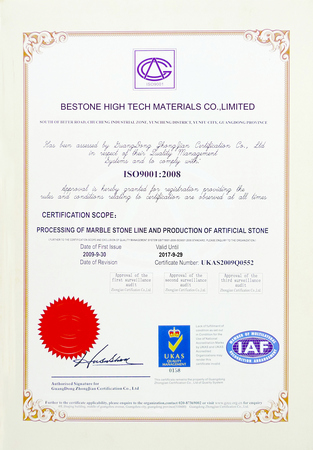
Alongside the test report, a project package normally carries the packing list, the commercial documents for the shipment, and whatever certificate or report set your client has requested. Tell us at quotation stage which documents you need to hand over, because assembling them after the container has sailed is the slow way to do it.

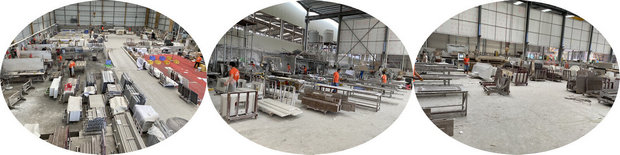
We also welcome factory inspections and third-party inspection before shipment. If your client wants to see the sheets laid out, or wants an inspector present while the pallets are packed, arrange it with your sales contact and it can be scheduled into the production run.
The four figures that decide how this white marble stone mosaic behaves on a wet wall are water absorption, Mohs hardness, flexural strength and compressive strength. Each one is a property of the marble batch rather than of the range, so it is issued against the stone in your order and printed with the method used to obtain it. Water absorption tells you how much sealer maintenance the wall will ask for. Marble is stone, not sealed plastic: it takes up a little water at the face, and the polish slows that without stopping it. What keeps a shower dry is the waterproofing behind the sheet plus a penetrating sealer on the face after grouting; the absorption figure is not a waterproofing guarantee. Mohs hardness explains how the face ages. Marble is soft next to granite or engineered quartz, and that same softness is what lets it take a mirror polish and hold a crisp edge on every triangle. Upright, nothing abrades it — but a scouring pad, a gritty cloth or an acidic bathroom spray will dull the polish and mark the brass. Flexural strength matters at edges and cut-outs. A sheet this thin spans nothing; it follows the substrate, so a hollow behind the mesh turns into a cracked piece or a lipped joint months later. The figure tells your installer what the stone tolerates while it is being lifted, cut and bedded. Compressive strength is about stacking and handling as much as about the wall. Cartons ship at 21 kg and pallets at 1537 kg, and the stone has to survive being stacked, re-stacked and set down on site without a sheet failing mid-run. Where a property has not been measured on a batch, we say so rather than quote a number we cannot stand behind.





- Shower enclosures. Set from tray to ceiling so the brass lines run unbroken up the wall. A geometric white marble tile for shower wall decoration earns its place here because the pattern gives a narrow enclosure a vertical line to follow instead of a flat white box. - Bathroom feature walls. One wall behind a freestanding bath, or the wall a vanity sits against, set while the rest of the room stays quiet. - Hotel and guest bathroom refurbishment. The same sheet repeated across identical rooms, which is where a held colour line and whole-pallet ordering matter more than the pattern itself. - En-suites and wet rooms. Smaller areas where a polished surface bounces the little available light back into the room. - Spa, wellness and pool-house washrooms. A warm metallic detail suits a room designed around water; confirm the sealing and cleaning regime with your installer before specifying it in a chlorinated or steam environment. - Powder rooms and cloakrooms. The one wall a guest stands close to, which is exactly where the marble and brass detail earns its keep.




| Size | 308*355mm | Material | Thassos White with Stainless Steel Gold Brass |
| Thickness | 7mm | Net Weight | 1.85 kg per Sheet |
| Color | Natural White Marble Stone | ||
| Surface | Polished Finish | ||
| Mounting | Mesh-Monuted | ||
| Packing Details | 11 Sheets / Carton, 72 Cartons / Pallet, 20 Pallets / Container | ||
| Packing Weight | 21kg / Carton, 1537kg / Pallet | ||
| Carton Size | 31.5x37.0x9.50cm |






We supply this sheet to four kinds of buyer, and each one judges it differently.

Importers and stone distributors in North America, the UK and Europe buy it as a stock line. What they need is a white that holds its tone across a pallet, cartons that stack and store without crushing, and a sheet size a showroom can display flat. They usually start with a pallet and re-order against the same pattern.

Fabricators and cut-to-size workshops buy it because a mesh-mounted sheet is faster to set than loose mosaic, and because it can be cut around a valve or a niche without being re-laid piece by piece. For them the questions are about the mesh, the thickness, and how the sheet behaves on a wet saw.

Project contractors and developers order against a bathroom schedule — dozens of rooms, one pattern, one delivery window. That is a packing and consistency question rather than a design question, so we quote it with the pallet and container plan in view. Importers who also buy slabs often pair this sheet with our Calacatta Statuario, Calacatta Divine or Calacatta Gold quartz, so the wall and the counter arrive from one supplier.
Designers and showroom buyers choose the pattern first and the quantity later, and usually want a sheet in their hands before they will draw it into a scheme.
Working with a marble mosaic tile factory rather than a trading office shows up at the awkward moments: a pattern that has to be re-cut, a pallet added to a running order, a bathroom schedule that gains ten rooms. There is no third party in the middle to ask.






Bestone has been in the stone trade since 2007 and selling through our website to overseas buyers since 2012. Production is in-house, so standard runs and custom or private-label orders are handled by one team rather than passed between suppliers. We serve distributors, fabricators, contractors and designers across North America, Europe, the Middle East, Southeast Asia and Australia, and we confirm each order in writing before production starts. Send our sales team your quantities, destination and target specification, and we will tell you exactly what we can commit to.