Product Overview
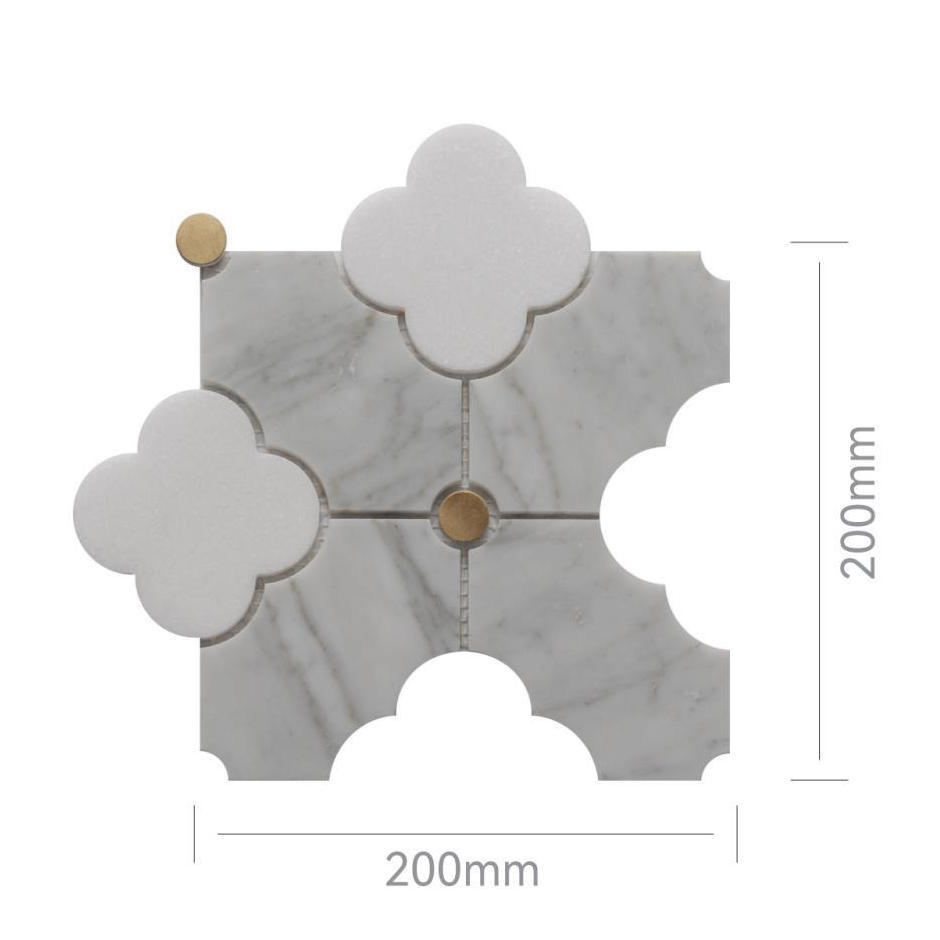
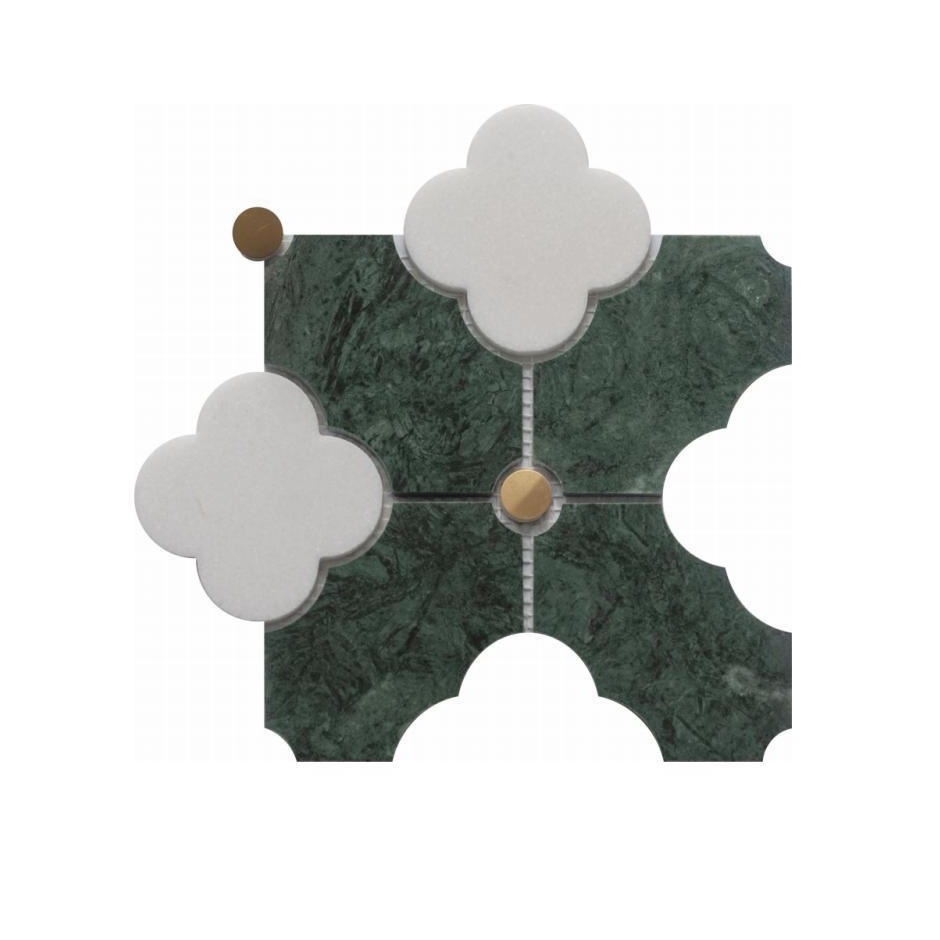
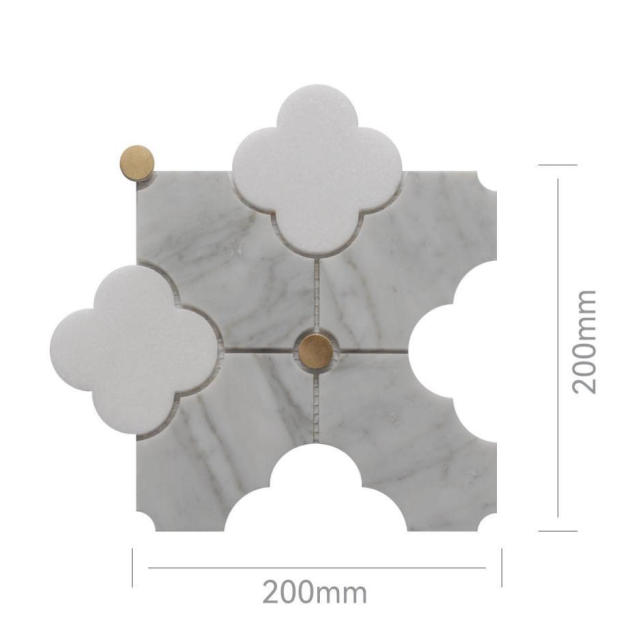
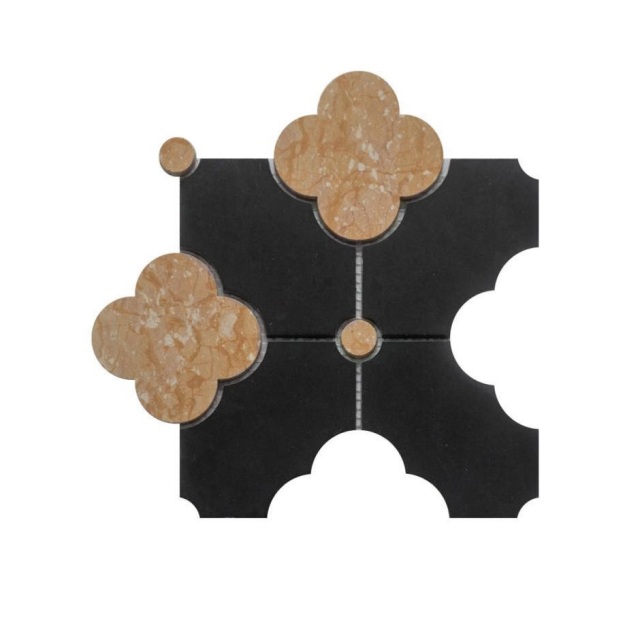
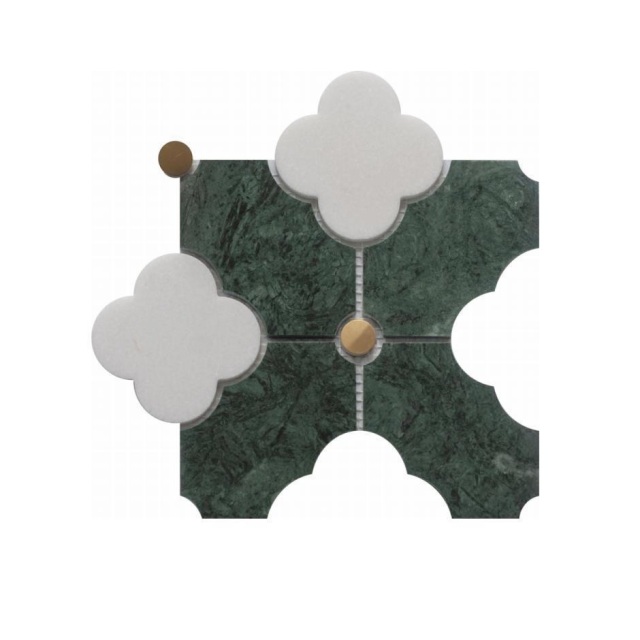
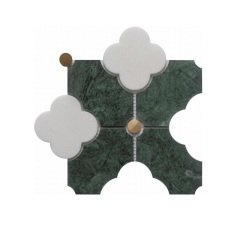
Marble mosaic tiles for floors in a floor-scale module, built from cut natural marble set around a small quatrefoil motif with fine brass-tone dots at the intersections, then assembled into mesh-backed mosaic sheets so the pattern holds its alignment while it is being laid. The size is the practical middle ground for floors: small enough to follow a fall to a drain, turn a corner or wrap a pedestal without the wide cut lines a large-format tile leaves, and large enough that a whole room does not read as a carpet of tiny chips.
Production & Quality Control
- Stone selection and grading. Blocks are inspected on arrival and sorted by tone before any cutting starts, so a run of sheets begins from a consistent selection.
- Cutting. The stone is sawn into the small units that make up the pattern, with the module held constant so sheets line up edge to edge.
- Forming. Units are laid into the pattern face-up and bonded to the mesh backing, which is what keeps the quatrefoil and the dot accents in register from one sheet to the next.
- Grinding and polishing. Faces are calibrated to an even thickness and polished; this is the stage that decides how the inserts and the dots catch the light.
- Edge cutting. Sheets are squared and trimmed so the module is true and the outer edge is clean enough for a butt joint.
- QC and packing. Our QC team checks alignment, edge condition, tone and surface for chips, then packs and labels the cartons; anything that does not pass is pulled before it reaches the pallet.
- New patterns go through our R&D department and are run by experienced operators, and our plant also operates four automatic quartz slab production lines — the same engineering and management discipline covers both, so process control stays in our own hands rather than being outsourced.
Material & Finish
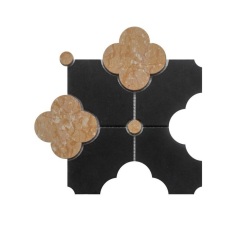
The stone is natural marble, cut into small units, polished and assembled into mesh-backed mosaic sheets. Because it is quarried stone rather than a cast surface, no two sheets are identical: the ground can move from a soft white into light grey, veining runs where the block ran, and a darker field with tan inserts reads very differently in a small room than it does on a sample board. That variation is the point of the material, and it has one practical consequence — order the whole floor in a single run so the tone comes from one selection. A polished face gives the floor its reflectivity and its depth. Where the floor is walked on barefoot and often wet, many specifiers prefer a honed or matt surface instead, so tell us the finish you need and we will confirm what is available for the pattern you have chosen. As with any marble floor, sealing is part of the installation rather than something built into the tile; your fitter should confirm the sealer and the reapplication interval for the conditions on site.
Installation & Layout
- Check the substrate first. Marble mosaic tiles for floor need a flat, sound, dry surface free of dust or curing compounds before anything is laid, and your installer should confirm the tolerance the chosen adhesive requires.
- Dry-lay the room. Open several cartons at once and shuffle the sheets so the natural tone variation spreads across the floor instead of clustering in one corner.
- Set out from the centre. Find the centre lines, work outward, and check pattern alignment every few sheets rather than at the end of the run.
- Fix with a suitable adhesive. Use a white, marble-safe adhesive, because a grey adhesive can show through pale stone, and comb it with a notched trowel sized to the sheet.
- Cut the mesh, not the chips. Sharp scissors or a craft knife separate sheets between the chips; a wet saw handles edge cuts at thresholds, wastes and door frames.
- Grout after curing. Work grout into the joints with a rubber float, clean the residue off the face before it dries, and never let haze set overnight.
- Seal and protect. Apply a penetrating sealer once the floor is thoroughly dry, then cover the finished area with breathable protection while the rest of the build continues.
Care & Maintenance
Marble is a calcium-based stone, so keeping it looking right is as much about what you keep off it as what you put on it. A 200x200mm marble mosaic tile for bathroom floor use will see soap, shampoo, hard water and the occasional splash of something acidic, and it is the acidic products — vinegar, citrus cleaners, descalers, some grout haze removers — that dull a polished face. Use a pH-neutral stone cleaner diluted as the label directs, wipe spills rather than letting them sit, and rinse the floor after a stronger product has been used elsewhere in the room. Re-seal when water stops beading on the surface instead of working to a fixed calendar. A mat at the door and felt pads under anything that gets dragged across the floor will do more for the finish than any polish.
An importer in the United States describes the partnership as a game-changer for their business and treats the 109 countries the products reach as evidence of reliability rather than a marketing line. A European wholesaler in the construction trade says our stone range — slabs and decorative tile — has consistently impressed their clients on quality and finish. An Australian builder talks about durability and about how a finished bathroom looks at handover, which is the comment that matters when you are buying material by the pallet. All three buy from us as a natural stone floor tile wholesaler and have kept ordering.
Applications
- Family bathrooms and en-suites. The small module handles the tight area around a vanity, a shower tray and a door swing, where a large tile would need constant cutting.
- Walk-in showers and wet rooms. The small units let the floor fall to a linear or point drain without standing water, and the joint lines break up the surface in a way many specifiers prefer underfoot.
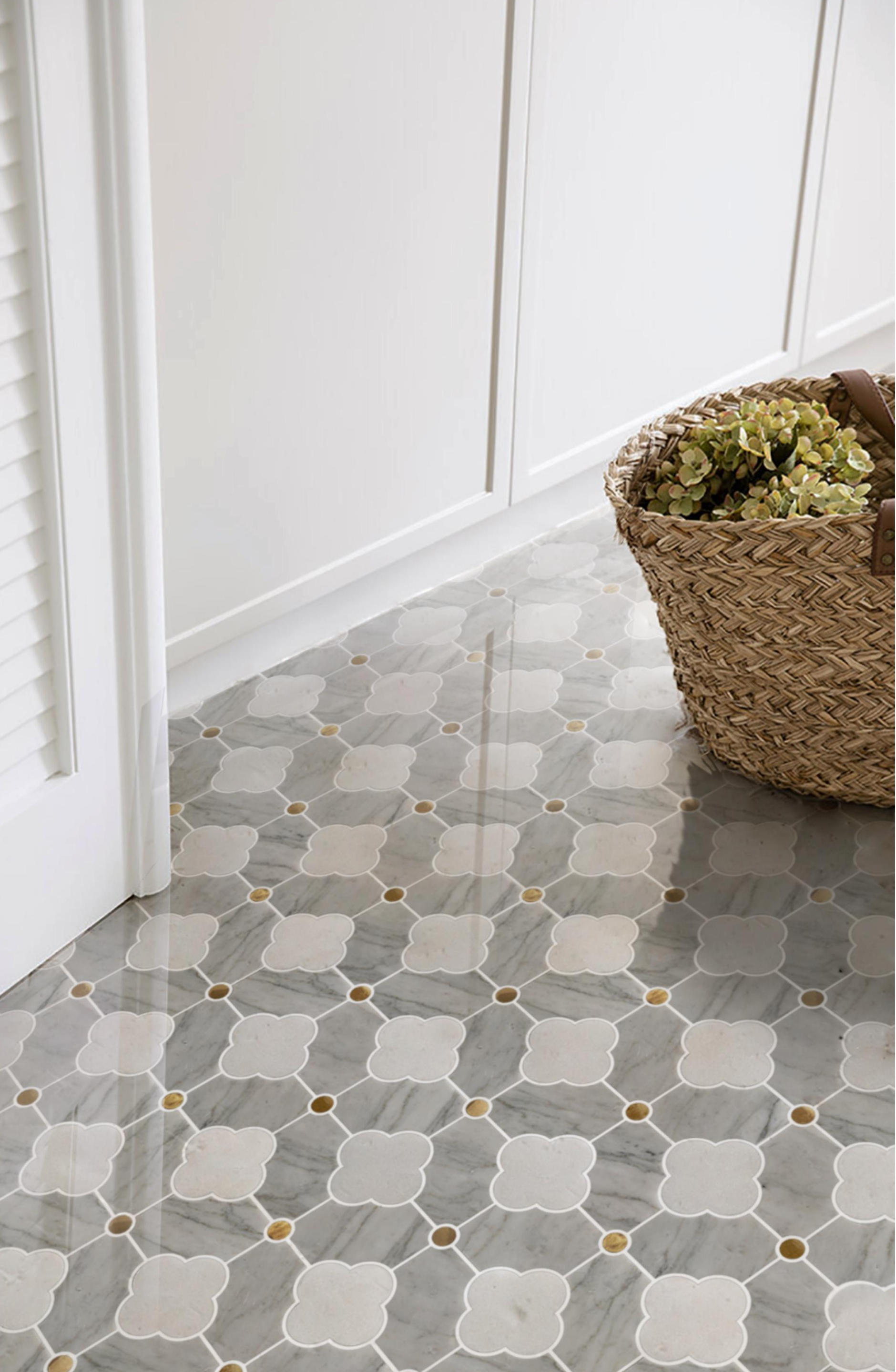
- Hallways and entryways. A marble mosaic floor tile set inside a border makes an entrance read as a designed space rather than a corridor, and the mesh-backed mosaic sheets hold the pattern square over a long run.
- Kitchen floors. Warm underfoot compared with large porcelain, and forgiving of the small level changes that older kitchens usually have.
- Hotel and hospitality bathrooms. The same sheet repeats across many rooms, which keeps the finish consistent from the first floor to the last.
- Restaurant, café and commercial washrooms. A patterned floor hides the marks a plain pale tile shows, and the module copes with the awkward shapes these rooms tend to have.
- Apartment and residential project packages. Ordered by area and delivered on one programme, so the pattern runs through every unit without a tone break.
Specifications
| Product type | Marble mosaic floor tile |
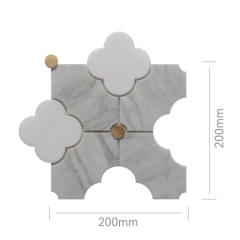
| Format | 200 x 200 mm |
| Material | Natural marble |
| Surface | Polished marble face |
| Pattern | Quatrefoil inserts with brass-tone dot accents |
| Mounting | Mesh-backed sheets |
| Sheet thickness | Confirmed for the selected pattern |
| Joint width | Set by the mesh spacing, so the grout line follows the sheet |
| Fixing | Flexible adhesive suitable for natural stone, agreed per project |
| Substrate | Level, sound internal floor; falls to a drain formed within the module |
| Sealing | Recommended for marble; sealer type agreed per project |
| Packing | Cartons on pallets, shrink-wrapped; carton coverage and pallet count confirmed per order |
| Typical applications | Bathroom floors, en-suites, hallways, kitchen floors, commercial washrooms |
| Suitable for | Residential and commercial interiors |
Test Data & Documentation
- Water absorption. Ask us for the measured value for this marble and the test method it was measured to; the figure belongs to the stone rather than to a general claim about the range.
- Mohs hardness. Request the measured value for the marble type you are specifying, so it can be compared with the other floors in the project.
- Flexural and compressive strength. Ask for both values together with the method recorded for each, so the numbers can be filed rather than quoted second-hand.
- Per-stone, per-test figures. Values should be quoted against a named stone and a named standard; if your specification requires them, raise it at quotation stage and we will confirm what can be supplied.
- Project documentation. Tell us what your handover pack needs — packing list, order confirmation, test documentation or inspection record — and we will confirm what can be included in your order.
- Natural variation. Stone changes from block to block, so where a project needs values inside a set range, request them before the order is placed rather than after delivery.
Format, Pattern & Custom Options
- A floor-scale module. The unit covers ground quickly while keeping the mosaic detail readable underfoot, so the pattern reads from standing height and not only up close.
- Pattern with depth. A marble field, quatrefoil inserts and small brass-tone dots sit at slightly different heights after polishing, which is what makes the floor change as light moves across it.
- A marble mosaic floor tile that follows the room. Small units turn corners, step down to a threshold and work around a waste without the long cut lines a larger tile would leave.
- Sheets stay in line. Every unit is mesh-mounted, so joints stay even across a long run and an entire area can be laid and adjusted before the adhesive sets.
- Layouts that change the room. Lay it square as a calm field, run a border around the perimeter, or set a defined rug of pattern inside a larger plain stone floor.
- Mixes with plain field tile. Many projects use the pattern as a border or a zone and a plain marble or quartz tile for the bulk of the floor; we quote the two together so the tones are chosen side by side.
- Custom work and OEM. If a project calls for a different insert shape, a different stone pairing or a repeat sized to a particular room, send the drawing and our R&D team will tell you what can be matched; we also produce OEM orders under the buyer's own label.
Ordering & Delivery
- Lead time. 15–25 days after deposit, confirmed against your quantities when the order is placed.
- Quotation. Pricing is built per pattern and per quantity; as a natural stone floor tile wholesaler we quote by the sheet, by the carton or by the project area, so send the measured area, the destination and the finish you want.
- Packing. Sheets are packed in cartons and palletised, and long-haul or project consignments are crated with internal protection.
- Loading. We confirm pallet counts, bracing and container loading with you before dispatch.
- Swatches. Ask your sales contact about sample and swatch availability before you commit a project to a tone.
- Custom and OEM orders. Private label, custom patterns and special packing are quoted individually — tell us the label, the packing and the quantity you need.
- Written confirmation. Sheet size, finish, carton and pallet quantities are confirmed in writing before production starts; quote the pattern reference No.MM121 when you ask about this floor.
- Contact. Send your drawings, quantities and destination to info@bstquartz.com and our team will come back with availability and a quotation.
Scale & Supply Capability
Bestone has been in the stone trade since 2007 and selling through our website to overseas buyers since 2012. Production is in-house, so standard runs and custom or private-label orders are handled by one team rather than passed between suppliers. We serve distributors, fabricators, contractors and designers across North America, Europe, the Middle East, Southeast Asia and Australia, and we confirm each order in writing before production starts. Send our sales team your quantities, destination and target specification, and we will tell you exactly what we can commit to.
FAQ
Is a marble mosaic floor tile suitable for a bathroom floor?
Yes, with the right build-up. Marble mosaic has been laid in bathrooms for a very long time; what matters is a sound, waterproofed substrate, a white marble-safe adhesive, a sealed surface and enough ventilation for the room to dry out. The one decision worth making early is the surface: a polished face is beautiful in a bathroom that stays mostly dry underfoot, while a honed or matt finish is often preferred where the floor is regularly wet. Tell us which you need and we will confirm the options for the pattern you have chosen.
How do I work out how much material to order?
Measure the net floor area, then add an allowance for cutting at the perimeter, around the toilet and any pattern alignment — your installer will give you the figure they are comfortable with. One 200x200mm marble mosaic tile for bathroom floor sheet covers a fixed area, and we confirm the sheet size, the coverage per carton and the carton count against your drawing before the order is placed. On a multi-room project, order the full quantity in one run so the tone comes from a single selection.
Will the marble match the sample and the previous order?
Natural marble moves. Veining, background tone and the density of the dots vary from block to block, and an approved sample is a point on that range rather than a promise of an identical sheet. Two things keep a project coherent: approve the sample in real room light rather than on a screen, and order the entire floor plus a small attic stock for later repairs in one production run. Where a project needs a tighter constraint than that, say so at quotation stage and we will tell you what can be held.
How is the mosaic fixed, and what needs to be underneath it?
The sheets are mesh-mounted, so they go down like a flexible mat: adhesive combed over a flat substrate, the sheet pressed in with a grout float or rubber trowel, joints kept tight and consistent, then grout once the adhesive has cured. On a timber floor the substrate has to be rigid and waterproofed before tiling; on concrete it has to be dry and free of laitance. Your installer sets the adhesive and grout to suit the substrate, and we are happy to talk the detail through with them before the order is placed.
Can the pattern be changed, or combined with plain tiles?
Both are common. The quatrefoil motif works as a border or as a defined zone inside a plain marble or quartz field, which lets the floor stay calm with one area of pattern, and layouts can be banded or rotated to change the rhythm. If you need a different insert shape, a different stone pairing or a repeat sized to a specific room, send a drawing or a reference image and our R&D team will confirm what can be produced.